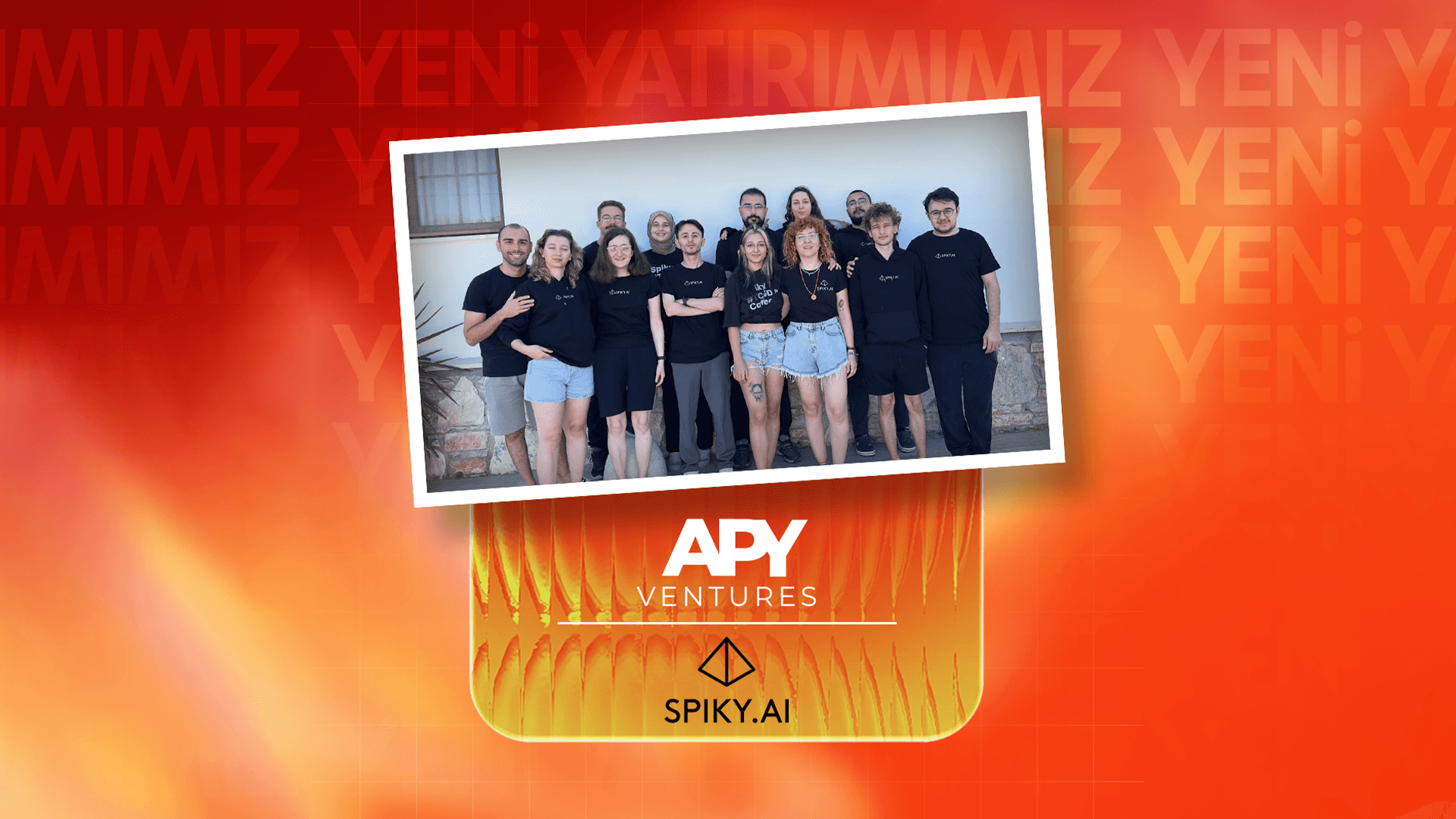
Spiky.ai, an artificial intelligence-based advanced analytics platform, has raised $2.8 million in investment.

Poliark, a startup developing digital twins for cities, raises $500K investment
Poliark has raised $500K in investment from APY Ventures Bilişim Vadisi VC Fund, KT Portföy Lonca VC Fund, Rubellious Nucleus Investments, and Sustainable Impact VC.
Recently, digital twin technology has been appearing in many different fields. In this context, Poliark, which operates particularly with a focus on cities, has raised $500K in investment from APY Ventures Bilişim Vadisi VC Fund, KT Portföy Lonca VC Fund, Rubellious Nucleus Investments, and Sustainable Impact VC.
First of all, for those who may not know; a digital twin can be defined as a digital representation or reflection of an object or asset. In short, we can say that digital twins are digital models that accurately mimic the physical characteristics, behaviors, or functions of an object or asset. Digital twins are generally used in various applications such as real-time monitoring, simulation, analysis, and optimization of objects.
Founded by Eda Erol, Poliark offers a patented technology aimed at increasing urban livability, with offices in New York and Ankara, and develops artificial intelligence and digital twins.
Poliark is an artificial intelligence and digital twin technology company specializing in the built environment. It transforms the planning, design, construction, and operation processes of buildings and cities from end to end, building a more sustainable, efficient, and environmentally friendly future.
The startup enables fully automated 3D reconstruction of urban environments without the need for any field team. By functioning as an AI assistant, it accelerates technical drawing and 3D modeling processes by 60%. It offers a comprehensive material catalog that includes durability, solar radiation, and carbon footprint data, and comes with an integrated 3D dataset of cities connected with IoT, ready for use.
Acting as an environmental impact consultant, the AI provides the opportunity to consider carbon footprint when selecting construction materials, integrating carbon awareness from the design stage and facilitating carbon-neutral designs. This approach is claimed to contribute to a more sustainable future by reducing emissions throughout the entire lifecycle of buildings.
Poliark, a startup developing digital twins for cities, raises $500K investment
Poliark has raised $500K in investment from APY Ventures Bilişim Vadisi VC Fund, KT Portföy Lonca VC Fund, Rubellious Nucleus Investments, and Sustainable Impact VC.
Recently, digital twin technology has been appearing in many different fields. In this context, Poliark, which operates particularly with a focus on cities, has raised $500K in investment from APY Ventures Bilişim Vadisi VC Fund, KT Portföy Lonca VC Fund, Rubellious Nucleus Investments, and Sustainable Impact VC.
First of all, for those who may not know; a digital twin can be defined as a digital representation or reflection of an object or asset. In short, we can say that digital twins are digital models that accurately mimic the physical characteristics, behaviors, or functions of an object or asset. Digital twins are generally used in various applications such as real-time monitoring, simulation, analysis, and optimization of objects.
Founded by Eda Erol, Poliark offers a patented technology aimed at increasing urban livability, with offices in New York and Ankara, and develops artificial intelligence and digital twins.
Poliark is an artificial intelligence and digital twin technology company specializing in the built environment. It transforms the planning, design, construction, and operation processes of buildings and cities from end to end, building a more sustainable, efficient, and environmentally friendly future.
The startup enables fully automated 3D reconstruction of urban environments without the need for any field team. By functioning as an AI assistant, it accelerates technical drawing and 3D modeling processes by 60%. It offers a comprehensive material catalog that includes durability, solar radiation, and carbon footprint data, and comes with an integrated 3D dataset of cities connected with IoT, ready for use.
Acting as an environmental impact consultant, the AI provides the opportunity to consider carbon footprint when selecting construction materials, integrating carbon awareness from the design stage and facilitating carbon-neutral designs. This approach is claimed to contribute to a more sustainable future by reducing emissions throughout the entire lifecycle of buildings.